期刊名称:NPJ MICROGRAVITY
 期刊简介(About the journal)
投稿须知(Instructions to Authors)
编辑部信息(Editorial Board) 期刊简介(About the journal)
投稿须知(Instructions to Authors)
编辑部信息(Editorial Board)
About the journal
An open access, online-only, multi- and trans-disciplinary research journal, npj Microgravity is dedicated to publishing the most important scientific advances in the life sciences, physical sciences, and engineering fields that are facilitated by spaceflight and ground-based analogue platforms.
Aims & Scope
npj Microgravity covers research that enables space exploration, including scientific research needed to develop advanced exploration technologies and processes, particularly those profoundly affected by operation in a space environment; and research that is enabled by spaceflight and ground-based spaceflight analogues that provides novel insight into life, engineering and physical sciences to benefit Earth-based research and the general public.
To provide a thorough understanding of the scientific impact and future of spaceflight research, npj Microgravity will publish a variety of article types including Articles, Review Articles, Editorials, Brief Communications and Correspondences. Relevant and high-impact papers are considered for publication including (but not limited to):
- human health, performance and disease prevention
- fundamental and applied animal and plant research
- fundamental and applied cellular, molecular, and tissue biology
- fundamental and applied microbiology research
- fundamental physics
- fluid physics
- biophysics
- earth observations and remote sensing
- technology and instrumentation advances, including biotechnology
- complex fluids
- materials science
- combustion science
- astrobiology
- nanotechnology.
Instructions to Authors
Content types
On this page: Article | Brief Communication | Comment | Correspondence | Editorial | Meeting Report | Perspective | Review
Article
An Article is a substantial research study, with a complex story often involving several techniques or approaches. The main text (excluding abstract, Methods, references and figure legends) is typically no more than 4,000-4,500 words. The abstract is typically 150 words, unreferenced. Articles have up to 10 display items (figures and/or tables). An Introduction section is followed by sections headed Results, Discussion, Methods, and Data Availability. The Results and Methods should be divided by topical subheadings; the Discussion may contain subheadings at the editors' discretion. As a guideline, Articles have around 60 references.
Articles include received and accepted dates. They may be accompanied by supplementary information. Articles are peer reviewed.
Brief Communication
A Brief Communication reports a concise study of high quality and broad interest. Brief Communications begin with a brief unreferenced abstract (3 sentences, usually no more than 70 words). The main text is typically 1,000-1,500 words, including abstract, references and figure legends, and contains no headings. Brief Communications normally have no more than 2 display items, although this may be flexible at the discretion of the editor. Brief Communications include a Methods and Data Availability section. As a guideline, Brief Communication have around 20 references.
Brief Communications include received and accepted dates. They may be accompanied by supplementary information. Brief Communications are peer reviewed.
Comment is a very flexible format; Comments may be on policy, science and society or purely scientific issues. The main criteria are that they should be of immediate interest to a broad readership and should be written in an accessible, non-technical style. Their length is typically 1,000-2,000 words. Because the content is variable, the format is also flexible. Comments do not normally contain primary research data, although they may present 'sociological' data (funding trends, demographics, bibliographic data, etc.). References typically do not exceed 25.
Comments include received and accepted dates. Comments are typically peer reviewed.
Correspondence
Important scientific comments and clarifications on peer-reviewed articles published in a Nature Partner Journal may be submitted as Correspondence. A Correspondence article may be published alongside a reply from the authors of the original article. These pieces are not applicable for an Article Processing Charge. The Correspondence should reference the original article in the first paragraph. The format is unstructured, with no abstract or headings and would typically not exceed 800 words, and 10 references.
Correspondences include received and accepted dates. Correspondence articles are typically peer reviewed, and can on occasion include supplementary information.
Editorial
Editorials are written by the senior editorial team of the journal, under the direction of the Editor in Chief. They are not typically peer reviewed, although they can be at the discretion of the editorial team, and are published with received and accepted dates.
Meeting Report
Meeting Reports are commissioned by the Editors and should include a substantive discussion and clear outputs from a scientific meeting or workshop that will be of broad interest to the wider community including those that could not attend. The text should not normally exceed 3000 words. As a guideline, Meeting Reports allow up to 70 references.
Meeting Reports are always peer reviewed and include received and accepted dates.
Perspective
Perspective is a format for scholarly reviews and discussions of the primary research literature that are too technical for a Commentary but do not meet the criteria for a Review—either because the scope is too narrow, or because the author is advocating a controversial position or a speculative hypothesis or discussing work primarily from one group. Two reviews advocating opposite sides in a research controversy are normally published as Perspectives. The text should not normally exceed 3000 words. As a guideline, Perspectives allow up to 70 references.
Perspectives are always peer reviewed and include received and accepted dates.
Review
A Review is an authoritative, balanced and scholarly survey of recent developments in a research field. The requirement for balance need not prevent authors from proposing a specific viewpoint, but if there are controversies in the field, the authors must treat them in an even-handed way. Reviews are normally 3,000-4,000 words, and illustrations are strongly encouraged. References are typically limited to 100, with exceptions possible. Citations should be selective. The scope of a Review should be broad enough that it is not dominated by the work of a single laboratory, and particularly not by the authors' own work.
Reviews include received and accepted dates. Reviews are always peer reviewed.
Editorial Board
Editor-in-Chief
 Cheryl A. Nickerson, PhD Cheryl A. Nickerson, PhD
The Biodesign Institute
Arizona State University
AZ, USA
Cheryl is a Professor of Life Sciences in the Biodesign Institute at Arizona State University. Her multidisciplinary research blends microbiology, tissue engineering and physics to mimic the dynamic interactions between the host, its microenvironment, and the pathogen that lead to infection and disease. She focuses on bacterial pathogen and human host cellular and molecular responses to physical forces that are physiologically relevant to those found in vivo during the natural course of infection, and how these responses are related to infectious disease. Her team has developed several innovative model pathogenesis systems to study these processes, including 3-D organotypic tissue culture models as predictive platforms to study host-pathogen interactions, and approaches that characterize pathogen responses to physiological fluid shear forces encountered in the infected host, as well as in the microgravity environment of spaceflight.
Deputy Editor
 Mark Ott, PhD Mark Ott, PhD
Microbiology Laboratory
NASA Johnson Space Center
TX, USA
Mark is Technical Lead of the Microbiology Laboratory and Chair of the Biosafety Review Board at the NASA Johnson Space Center (United States). Mark oversees microbial monitoring of mission operations and has research expertise in the areas of microbial ecology of spacecraft, human and microbial responses to spaceflight, and the development of advanced tissue culture models to investigate infectious disease.
Associate Editors
 Jennifer Barrila, PhD Jennifer Barrila, PhD
The Biodesign Institute
Arizona State University
AZ, USA
Jennifer is an Assistant Research Professor at Arizona State University (United States). Her research focuses on how physiologically relevant biomechanical forces, such as fluid shear, regulate microbial pathogenesis and host responses to infection. She has also developed and applied advanced 3-D tissue models to study host-microbe interactions. Jennifer oversees the journal’s content in microbiology and pathogenesis.
 Eleanor A. Blakely, PhD Eleanor A. Blakely, PhD
Lawrence Berkeley National Laboratory
University of California Berkeley
CA, USA
Eleanor is a Senior Staff Biophysicist at the Lawrence Berkeley National Laboratory at the University of California Berkeley, Faculty Affiliate at Colorado State University, and Clinical Professor of Radiation Medicine at Loma Linda University, School of Medicine (United States). Her research focuses on the basic mechanisms of radiation responses, with an emphasis on charged particle radiation effects. Eleanor oversees the journal’s content in radiation responses.
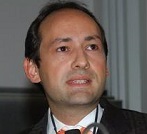 Alexander Chouker, MD, PhD Alexander Chouker, MD, PhD
Department of Anesthesiology
University of Munich
Munich, Germany
Alexander is Professor and clinical specialist in Anesthesiology at the Munich´s University hospital. He is heading the “Laboratory or translational research Stress and Immunity” with a focus on clinical immunology. He has been PI and science coordinator of international research projects on the ISS, in space analogue environments and clinical settings. He is chairing the interdisciplinary European Space Agency (ESA) Topical Team “Stress Challenges and Immunity in Space." Alexander oversees the journal’s content in human physiology.
 Atsushi Higashitani, PhD Atsushi Higashitani, PhD
Department of Molecular and Chemical Life Sciences
Tohoku University
Tohoku, Japan
Atsushi is a Professor at Tohoku University and has previously served on the faculty at National Institute of Genetics (Japan). His research focuses on biological responses to environmental stress (including those during spaceflight) and aging in the experimental model organisms, Caenorhabditis elegans and Arabidopsis thaliana. Atsushi oversees the journal’s content in animal models to study stress in spaceflight.
 Douglas Hofmann, PhD Douglas Hofmann, PhD
Jet Propulsion Laboratory
California Institute of Technology
CA, USA
Douglas is a scientist at NASA's Jet Propulsion Laboratory/California Institute of Technology (United States). His research focuses on metals and manufacturing, primarily on bulk metallic glasses, metal matrix composites, alloy development for additive manufacturing, new additive manufacturing technologies, and on microgravity metals processing. Douglas oversees the journal's content in materials science, primarily on metals and manufacturing.
 Andrew Lee, MD, PhD Andrew Lee, MD, PhD
Department of Opthalmology
Houston Methodist Hospital
TX, USA
Andrew is a Professor of Ophthalmology, Neurology, and Neurosurgery, at Weill Cornell Medicine and MD Anderson Cancer Center and adjunct professor at Baylor College of Medicine and the Center for Space Medicine (United States). Andrew oversees the journal’s content in neuroscience, particularly content involving neuro-ophthalmology.
 David Mendoza-Cozatl, PhD David Mendoza-Cozatl, PhD
Division of Plant Sciences
University of Missouri
MO, USA
David is an Associate Professor at the University of Missouri (United States). His research focuses on understanding how plants take up, accumulate and transport trace metals and macronutrients between roots and leaves and from leaves to seeds. David oversees the journal’s content in plant biology.
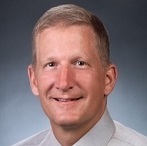 Brian Motil, PhD Brian Motil, PhD
Fluid Physics and Transport Branch
NASA Glenn Research Center
OH, USA
Brian is the Chief of the Thermal Systems and Transport Processes Branch of NASA Glenn Research Center (United States). His research focuses on fluid physics in the microgravity environment. Until recently, he served as the discipline lead for microgravity fluid physics at NASA Glenn where he oversaw the design, development, and implementation of NASA funded research in fluid and thermal transport, for platforms such as drop towers, parabolic flight aircraft, sounding rockets, and the ISS. Brian oversees the journal’s content in microgravity fluid physics.
 Neal Pellis, PhD Neal Pellis, PhD
Division of Space Life Sciences
Universities Space Research Association
TX, USA
Neal is an adjunct faculty member at the Center for Space Medicine at Baylor College of Medicine. Previously, he was a faculty member of University of Texas Medical School and the M.D. Anderson Cancer Center. Thereafter he was Director of NASA’s Biotechnology Cell Science Program and then Director of Space Life Sciences at Universities Space Research Association. Neal oversees the journal’s content in immunology and cell biology.
 Paul Steen, PhD Paul Steen, PhD
School of Chemical and Biomolecular Engineering
Cornell University
NY, USA
Paul is a Professor at Cornell University (United States) and holds the Maxwell M. Upson Chair in Engineering. His research focuses on the nonlinear dynamics and stability of fluid systems, especially those where surface tension plays a dominant role as in the shaping of liquid and gas phases in two-phase flows at high speeds. Paul oversees the journal’s content in dynamical fluid physics in the microgravity environment.
Editorial Board Members
Mina Bissell, PhD, Lawrence Berkeley National Laboratory, CA, USA
Sven Bossuyt, PhD, Aalto University, Espoo, Finland
Donald H. Burke, PhD, University of Missouri, MO, USA
Aurélie Crabbé, PhD, University of Ghent, Ghent, Belgium
Douglas Durian, PhD, University of Pennsylvania, PA, USA
Hans Fecht, PhD, University of Ulm, Ulm, Germany
Nandu Goswami, PhD, Medical University of Graz, Austria
Rasha Hammamieh, PhD, US Army Medical Research and Material Command, USACEHR, MD, USA
Martina Heer, PhD, University of Bonn, Bonn, Germany
John Z. Kiss, PhD, University of North Carolina, NC, USA
Sandra Magnus, PhD, The American Institute of Aeronautics and Astronautics (AIAA), VA, USA
Chiaki Mukai, MD, PhD, Japanese Aerospace Exploration Agency, Tokyo, Japan
Sundeep Mukherjee, PhD, University of North Texas,TX, USA
Eric Nauman, PhD, Purdue University, IN, USA
Robert J. Ploutz-Snyder, PhD, University of Michigan, MI, USA
Lori Ploutz-Snyder, PhD, University of Michigan, MI, USA
D. Marshall Porterfield, PhD, Purdue University, IN, USA
Antonio J. Ricco, PhD, NASA Ames Research Center, Moffett Field, CA, USA; and Stanford University, CA, USA
Kevin Sato, PhD, Wyle Science, Technology and Engineering, NASA Ames Research Center, CA, USA
Mark Shelhamer, Sc.D., NASA Johnson Space Center, TX, USA
Scott M. Smith, PhD, NASA Johnson Space Center, TX, USA
Jekan Thangavelautham, PhD, Arizona State University, AZ, USA
Stephen Tse, PhD, Rutgers University, NJ, USA
James Wilson, PhD, Villanova University, PA, USA
Sara R. Zwart, PhD, Universities Space Research Association (USRA), TX, USA
Nature Research
Managing Editor: Marie-Elizabeth Barabas, PhD
Senior Portfolio Editor: John Plummer, PhD
Executive Editor: Rebecca Kirk, PhD
Editorial Director: Meredith LeMasurier, PhD
Editorial Assistants: Molly Jiang, Yasmin Esmaeili and Rosie Tobutt
Editorial Administration Manager: Colm Pollard
Publisher/Director, Outreach and Partnerships: Andrea Macaluso
Production Editors: David Pentney, Annika Jesse and Kate Neil
Senior Production Editor: Jessica Hart
Operations and Partnerships Manager: Esther Trinh
Senior Marketing Manager: Heather Dunphy
Head of Researcher Experience: Katherine Arundell
VP Commercial, Nature Research Group: Andrew Douglas
Chief Editorial Advisor, Nature Research: Magdalena Skipper, PhD
|








 刊名字顺( Alphabetical List of Journals):
 返回页首
返回页首 