期刊名称:NPJ QUANTUM INFORMATION
|
ISSN: | 2056-6387
|
|
出版频率: | Continuous publication
|
|
出版社: | NATURE PORTFOLIO, HEIDELBERGER PLATZ 3, BERLIN, Germany, 14197
|
|
出版社网址: | https://www.nature.com/
|
|
期刊网址: | https://www.nature.com/npjqi/
| |
影响因子: | 7.385 |
| 主题范畴: | QUANTUM SCIENCE & TECHNOLOGY; PHYSICS, APPLIED; PHYSICS, ATOMIC, MOLECULAR & CHEMICAL; PHYSICS, CONDENSED MATTER |
| 变更情况: | Newly Added by 2017 |
 期刊简介(About the journal)
投稿须知(Instructions to Authors)
编辑部信息(Editorial Board) 期刊简介(About the journal)
投稿须知(Instructions to Authors)
编辑部信息(Editorial Board)
About the journal
npj Quantum Information is a new online-only, open access, multi- and interdisciplinary journal dedicated to publishing the finest research on quantum information, including quantum computing, quantum communications and quantum information theory.
Aims & Scope
The scope of npj Quantum Information spans across all relevant disciplines, fields, approaches and levels and so considers outstanding work ranging from fundamental research to applications and technologies. Fields covered include, but are not limited to, quantum computing and quantum communication, including solid state and optical devices, superconducting circuits, atomic and ion trap systems, topological quantum computing, atomic defects in solids, hybrid quantum circuits, cavity quantum electrodynamics, superconducting resonators, optical cavities, mechanical systems, single photon sources and detectors, engineering approaches for scale-up, quantum metrology, quantum sensing, quantum control, quantum networks, quantum error correction, architectures and quantum algorithms.
The journal hopes to develop and encourage the global exchange of ideas between physicists, computer scientists, material scientists, engineers, mathematicians and other researchers who are active at the frontiers of this diverse field.
The journal will publish a variety of article types including Articles, Review Articles, Editorials, Brief Communications, Correspondence and Meeting Reports. The journal will also publish an Editorial Summary to accompany each Article, which will summarise the key issues being addressed within the full article.
Article and journal metrics
Article metrics such as number of downloads, citations and online attention are available from each article page, and provide an overview of the attention received by a paper.
The 2017 journal metrics for npj Quantum Information are as follows:
2017 Journal Citation Reports (Clarivate Analytics, 2018)
For a further description of these metrics and a summary of the metrics for all Nature journals, please visit our journal metrics page. More information underlying our approach to journal metrics may be found here.
Indexing
npj Quantum Information is included in leading abstracting and indexing services, including: the DOAJ; Science Citation Index Expanded (also known as SciSearch®); Journal Citation Reports/Science Edition; and Current Contents®/Physical Chemical and Earth Sciences.
Instructions to Authors
For Authors & Referees
npj Quantum Information aims to serve as a comprehensive platform to promote quantum information research across a wide spectrum of scientific disciplines.
Please read the journal's Guide to Authors before submitting your next paper for detailed information on editorial criteria, and how manuscripts are handled between submission and acceptance for publication.
To submit a paper to npj Quantum Information, please use our online submission system.
Articles published in npj Quantum Information are open access, allowing for the widest dissemination, visibility, and impact of your research – visit the benefits to authors page to explore the reasons why you should publish with the journal.
Instructions to Authors
npjqi-gta.pdf
Editorial Board
Editor-in-Chief
 Professor Michelle Simmons Professor Michelle Simmons
Director, Centre for Quantum Computation & Communication Technology Primary Care University of New South Wales
Australia
Professor Simmons is the Director of the Centre for Quantum Computation & Communication Technology at the University of New South Wales in Sydney, Australia. Professor Simmons received a double degree in physics and chemistry and a PhD in Physics in 1992 from the University of Durham, UK. She was a research fellow at the Cavendish Laboratory in Cambridge where she gained an international reputation for her work in quantum electronics and mesoscopic physics. In 1999, she was awarded a QEII Fellowship and moved to Australia where she was a founding member of the Centre of Excellence for Quantum Computer Technology. She has since been awarded two Australian Research Council Federation Fellowships in quantum science and is currently an ARC Laureate Fellow and Scientia Professor in the Department of Physics at UNSW becoming Director of the Centre of Excellence in 2010.
As Director she oversees an interdisciplinary research group in both optical and silicon based quantum computation and its integration with a secure communications network. Their work focusses on developing both optical and silicon based quantum computer prototypes and repeater technologies for quantum communications. She and her team have developed a radical new technology for realising atomically precise devices in silicon and germanium developing the world’s first single atom transistor and the thinnest conducting doped wires in silicon. They are currently working towards developing a scalable donor based silicon quantum computer.
Professor Simmons has received numerous awards for her research. She is an Elected Fellow of the American Academy of Arts and Sciences, the UK Institute of Physics, Royal Society of New South Wales and the Australian Academy of Science. In 2005 she was awarded the Pawsey Medal by the Australian Academy of Science becoming one of the youngest elected Fellows of this Academy in 2006. In 2012 she was named NSW Scientist of the Year.
Associate Editors
 Professor Yu-Ao Chen Professor Yu-Ao Chen
Hefei National Laboratory for Physical Sciences, Microscale University of Science and Technology
People's Republic of China
Yu-Ao Chen is a Professor of Experimental Physics at the Hefei National Laboratory for Physical Sciences. His research interests include quantum information processing based on linear optics, multi-photon entanglement, quantum communication with linear optics and atomic ensembles, quantum memory, quantum simulation with ultra-cold atoms, and optical lattices.
 Dr. Audrey Cottet Dr. Audrey Cottet
Department de Physique de l'Ecole Normale Superieure
Laboratoire Pierre Aigrain
France
Audrey Cottet is a permanent CNRS researcher at the Laboratoire Pierre Aigrain (LPA) of the Ecole Normale Supérieure of Paris (ENS Paris). She works on the theory of hybrid quantum electronic circuits. Her research interests include Cavity Quantum Electrodynamics with hybrid nanocircuits, spin-dependent transport in nanostructures, superconducting proximity effects and Majorana devices. She also has a strong experimental background since she performed an experimental PhD on Josephson circuits, which led to the first superconducting quantum bit with a microsecond lifetime (Quantronium).
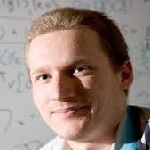
Dr. Jay Gambetta
Thomas J. Watson Research Center
IBM
USA
Jay Gambetta is the Manager of the Theory of Quantum Computing and Information Group at IBM's TJ Watson Research Center.

Dr. Matthew G. House
Centre for Quantum Computation & Communication Technology
The University of New South Wales
Australia
Matthew House is a Senior Research Fellow in the Centre for Quantum Computation and Communication Technology at The University of New South Wales. As a member of the atomic precision lithography team, his research focuses on cryogenic microwave control and measurement techniques for silicon spin qubits.
 Professor Kae Nemoto Professor Kae Nemoto
Quantum Information Sciences Group
National Institute of Informatics
Japan
Kae Nemoto is a Professor in the newly formed Quantum Information Sciences group at NII. Her research interests and efforts are currently focused around the requirements for true quantum computation, the generation of optical nonlinearities, schemes for quantum computation and information processing, quantum/atom optics and quantum nonlinear dynamics, and the foundations of quantum mechanics.
 Professor Philip Walther Professor Philip Walther
Head of the Quantum Optics, Quantum Nanophysics & Quantum Information Group
University of Vienna
Austria
Philip Walther is a Professor and Vice-Dean in the Faculty of Physics at the University of Vienna, Austria. From 2005–2008 he worked as a postdoctoral researcher in Physics at Harvard University, USA. In 2007 he became a member of the German Young Academy at the Berlin-Brandenburg Academy of Sciences and the German Academy of Natural Scientists Leopoldina. His research areas are quantum computing, quantum cloud computing, quantum simulation experiments, the investigation of quantum correlations as resource, and multi-photon generation and manipulation and light-matter interactions. He is an associate member of the Vienna Center for Quantum Science and Technology, and a member of the American Physical Society, Chemical-Physical Society and the European Physical Society.
 Professor Amir Yacoby Professor Amir Yacoby
Department of Physics
Harvard University
USA
Amir Yacoby is a Professor of Physics at Harvard University. He is also a Professor of Applied Physics at the School of Engineering and Applied Sciences at Harvard University and a visiting Professor at the University of Waterloo. His current interests are in understanding the behavior of low-dimensional systems and their applications to quantum information technology. His research topics include: Spin based quantum computing and metrology using semiconducting quantum dots and color centers in diamond; Topological quantum computing using HgCdTe quantum wells and fractional quantum Hall states; and interacting electrons in graphene multilayers.
David Awschalom
University of Chicago, USA
Michael Biercuk
The University of Sydney, Australia
Paola Cappellaro
Massachusetts Institute of Technology, USA
Andrew Childs
University of Maryland, USA
Klaus Ensslin
ETH Zurich, Switzerland
Mark Eriksson
University of Wisconsin-Madison, USA
Alessandro Fedrizzi
Heriot-Watt University, UK
Austin Fowler
Google Inc., USA
Lloyd Hollenberg
The University of Melbourne, Australia
Atac Imamoglu
ETH Zurich, Switzerland
Daniel Loss
University of Basel, Switzerland
Ping Koy Lam
Australian National University, Australia
Charles Marcus
University of Copenhagen, Denmark
Christopher Monroe
University of Maryland, USA
Jeremy O'Brien
University of Bristol, UK
Franco Nori
RIKEN, Japan, and The University of Michigan, USA
Tim Ralph
The University of Queensland, Australia
Robert J. Schoelkopf
Yale University, USA
Jacob Taylor
National Institute of Standards and Technology, USA
Lieven Vandersypen
TU Delft, Netherlands
Jelena Vuckovic
Stanford University, USA
Jörg Wrachtrup
University of Stuttgart, Germany
Yoshihisa Yamomoto
Stanford University, USA
|








 刊名字顺( Alphabetical List of Journals):
 返回页首
返回页首 